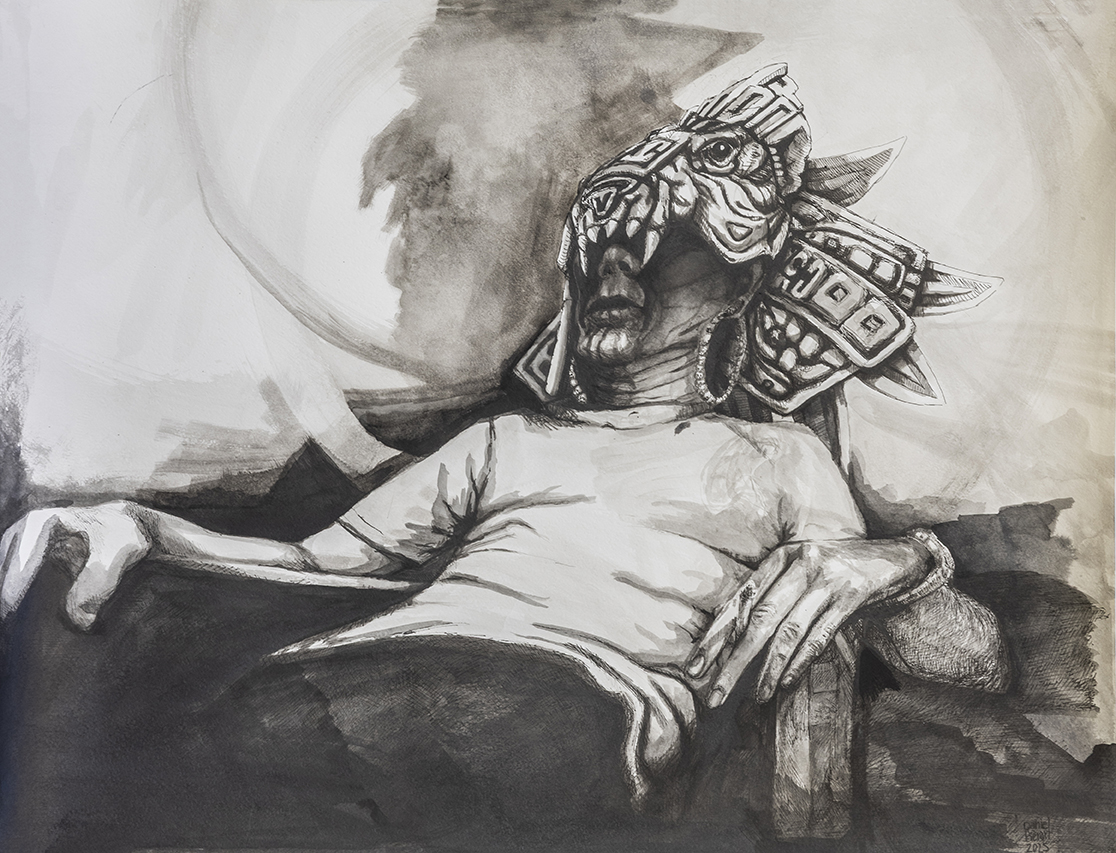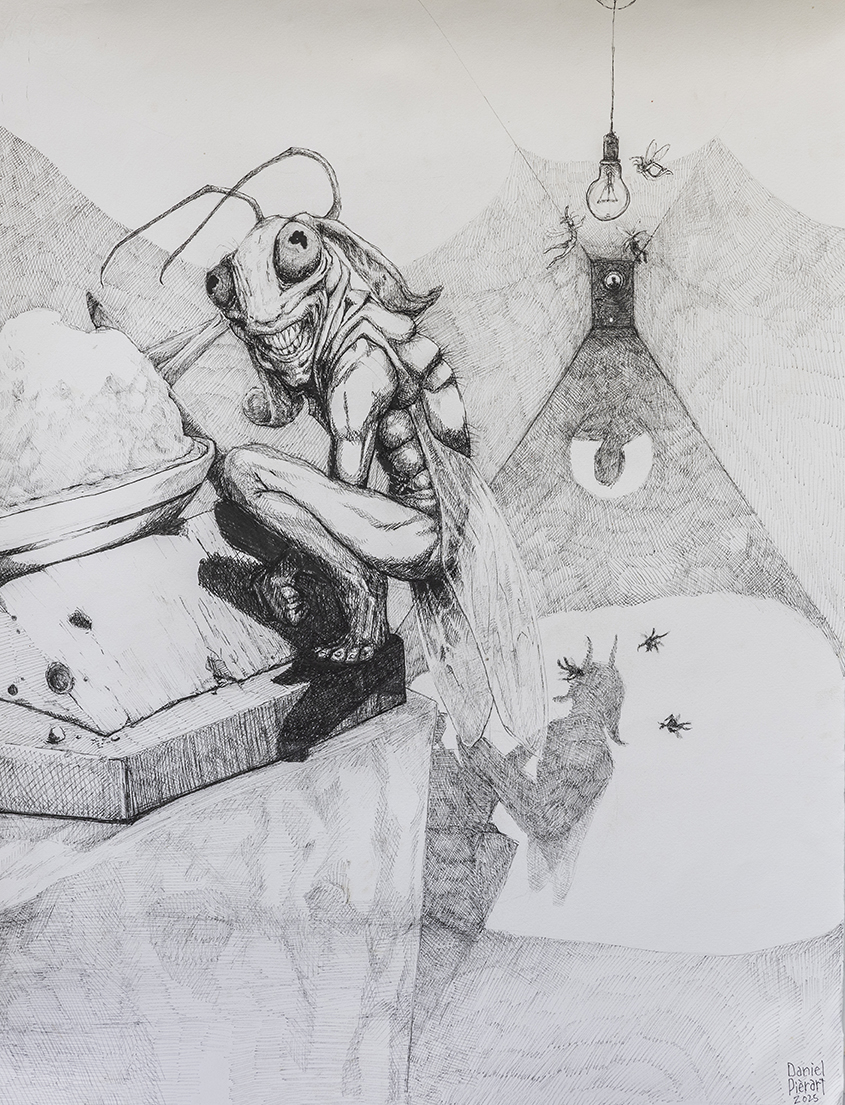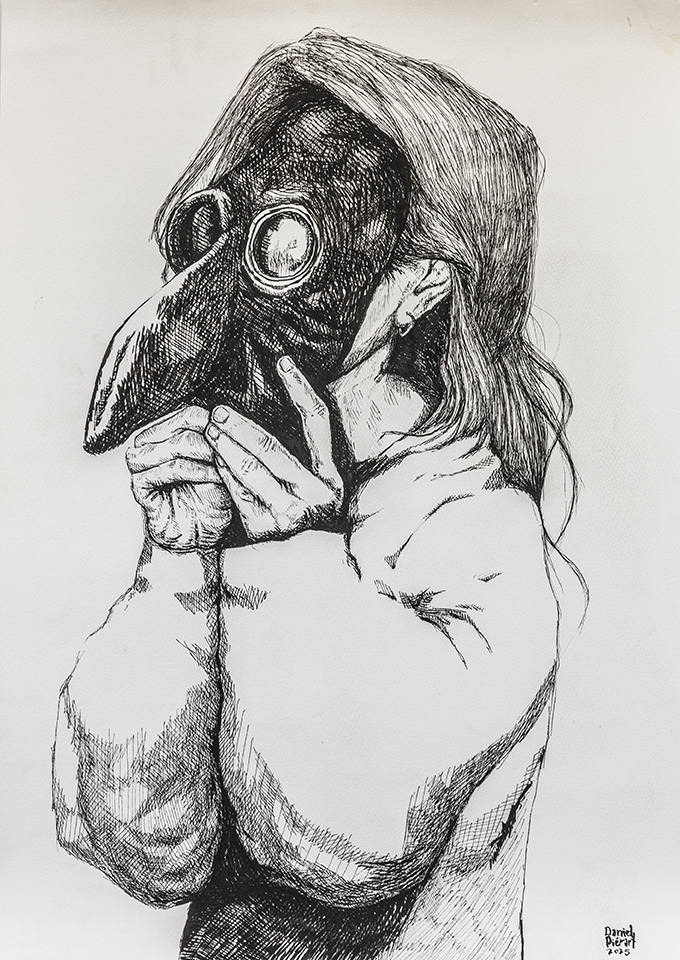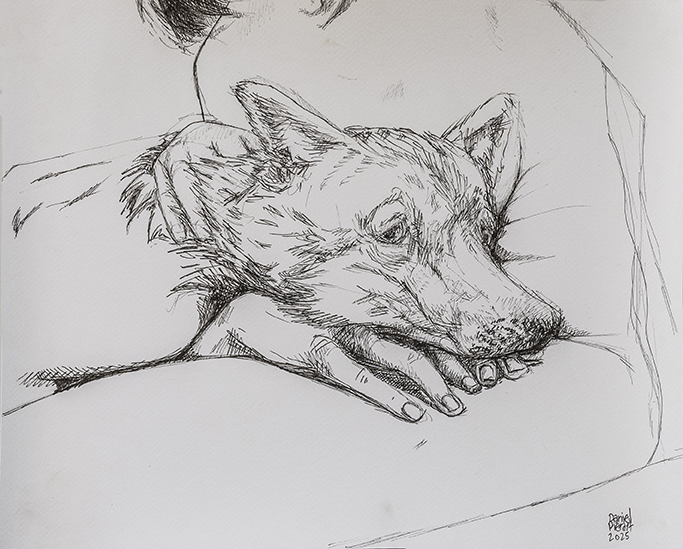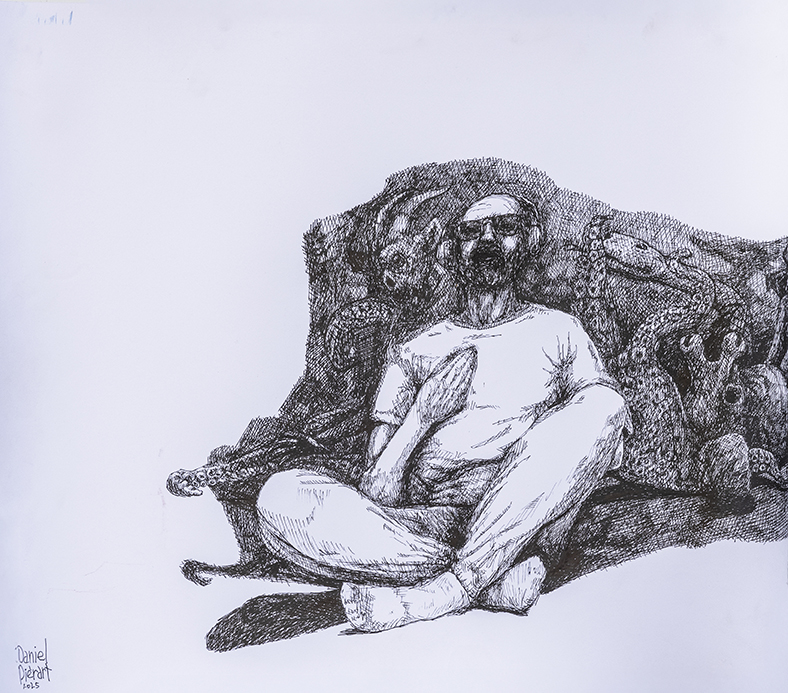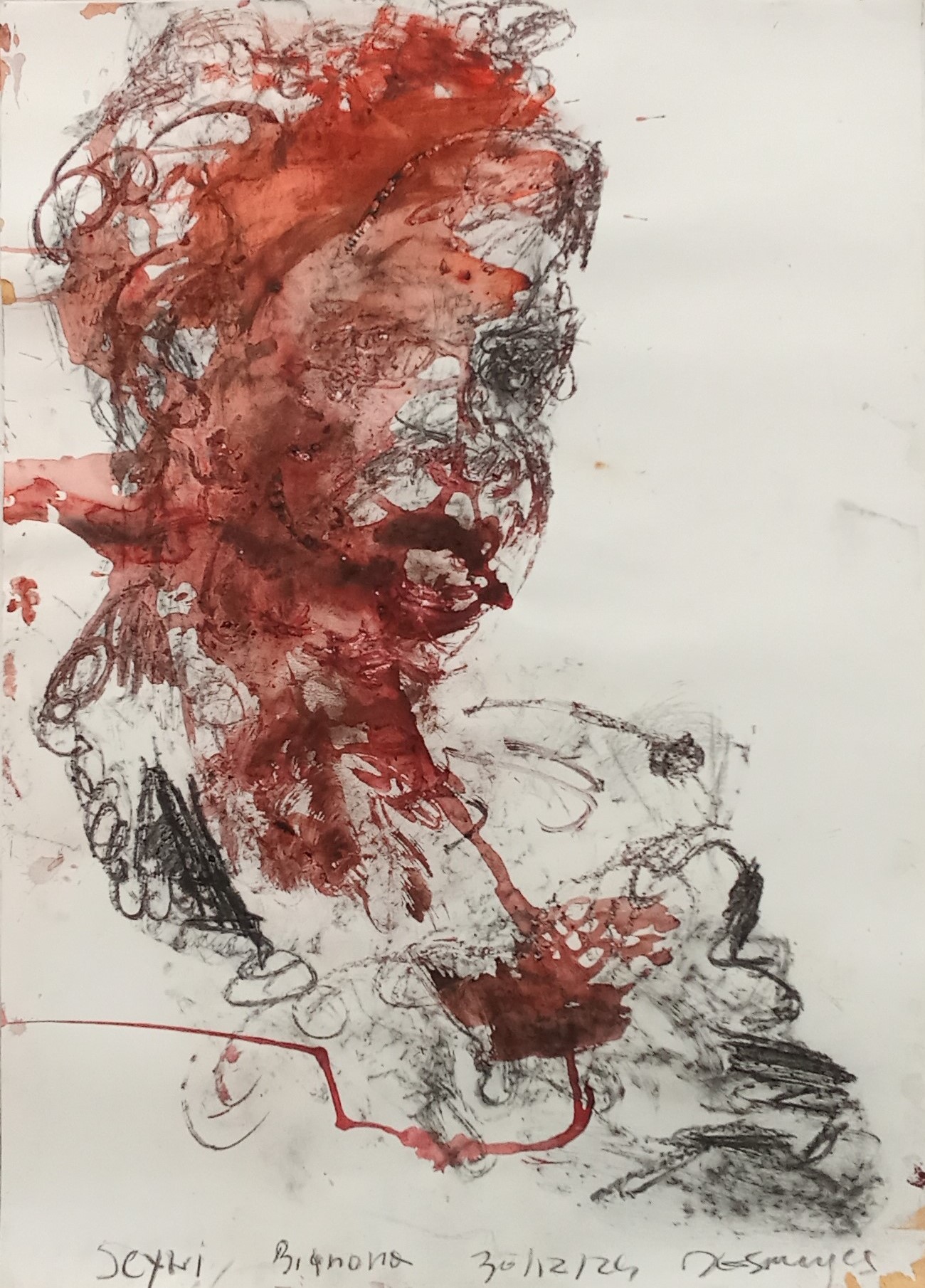
Daniel Piérart, 50 years old, is an escapist.
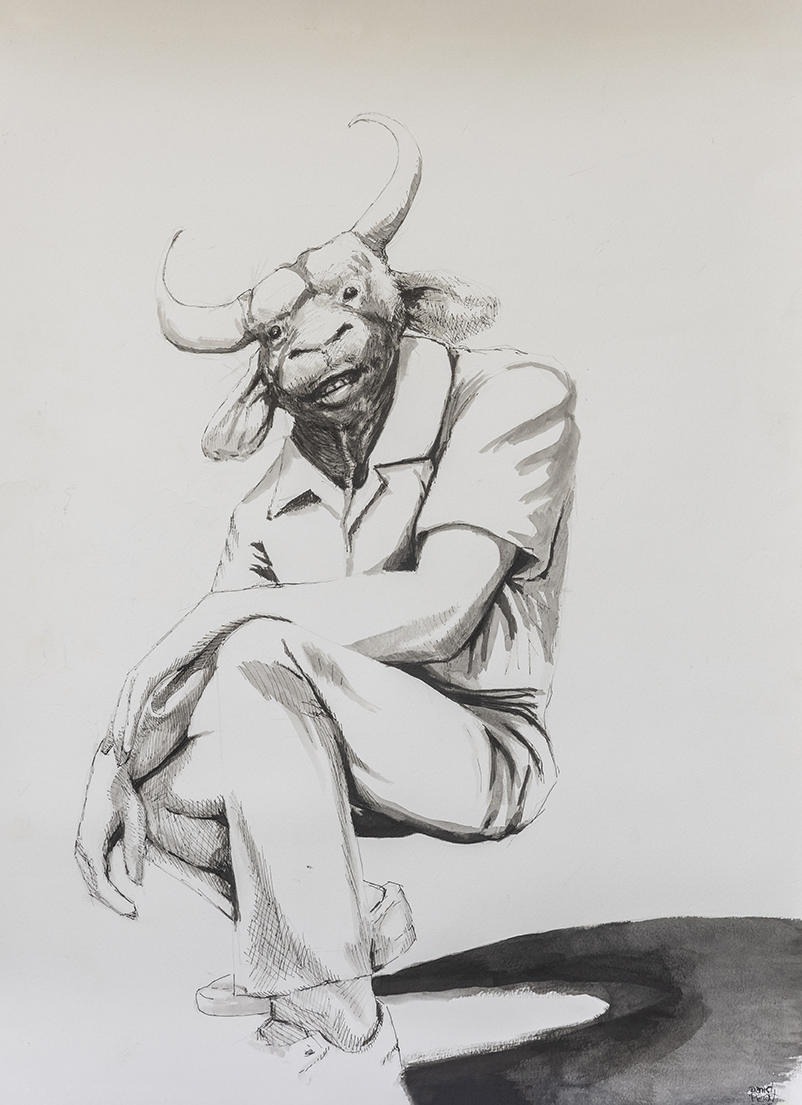
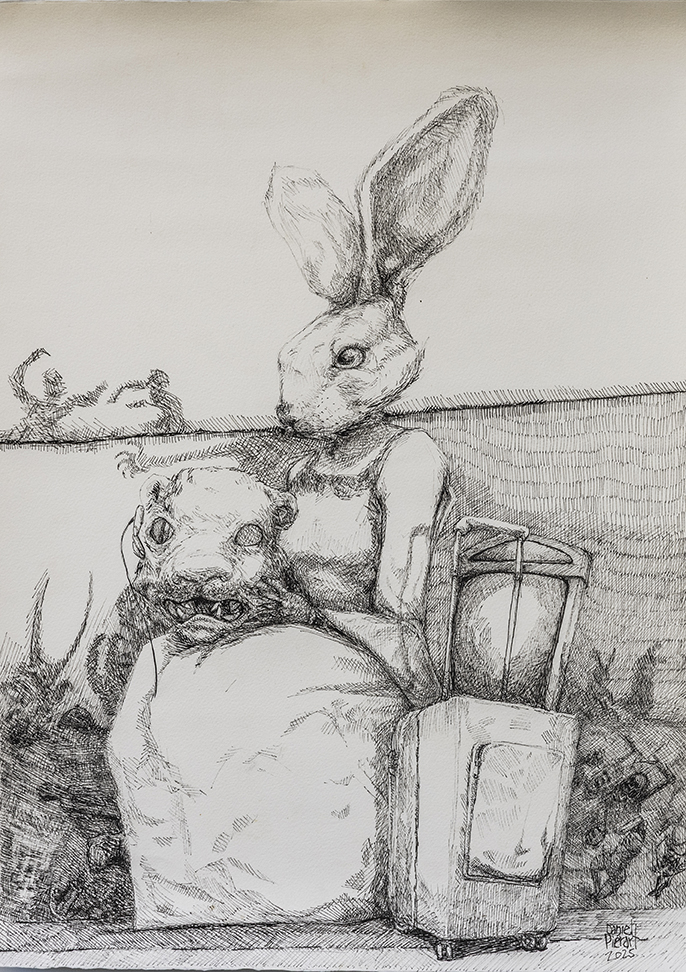
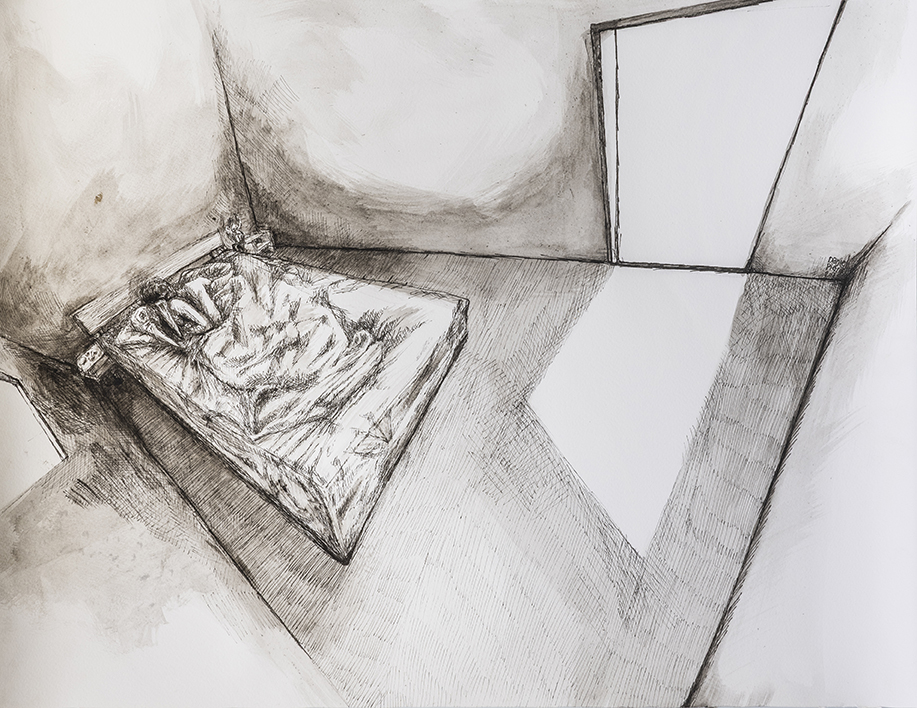
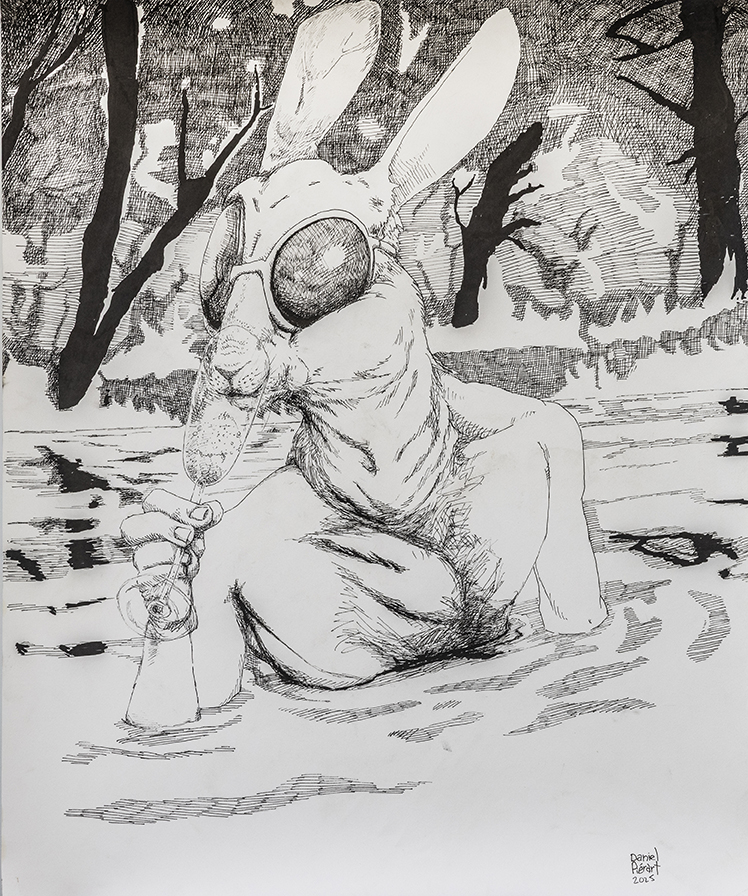
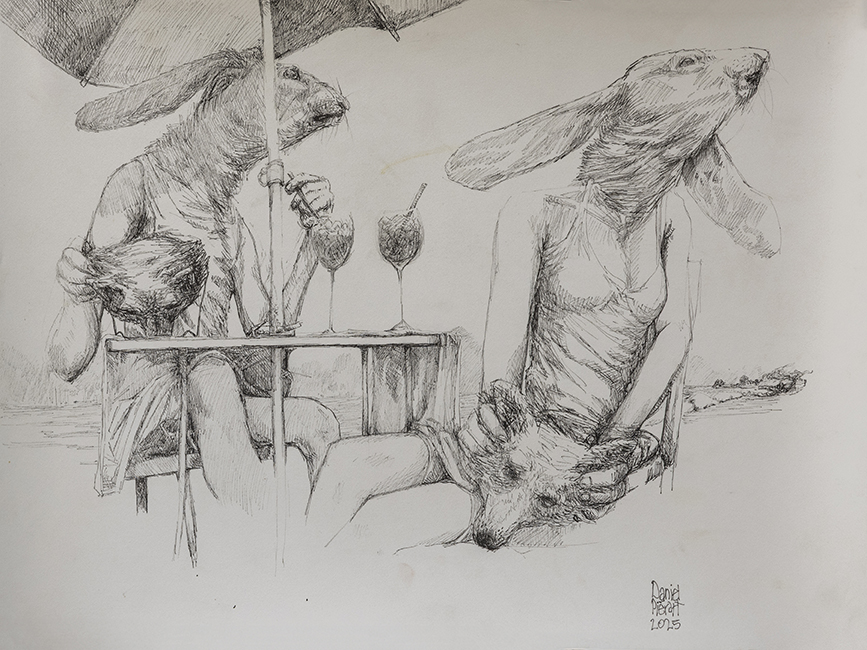
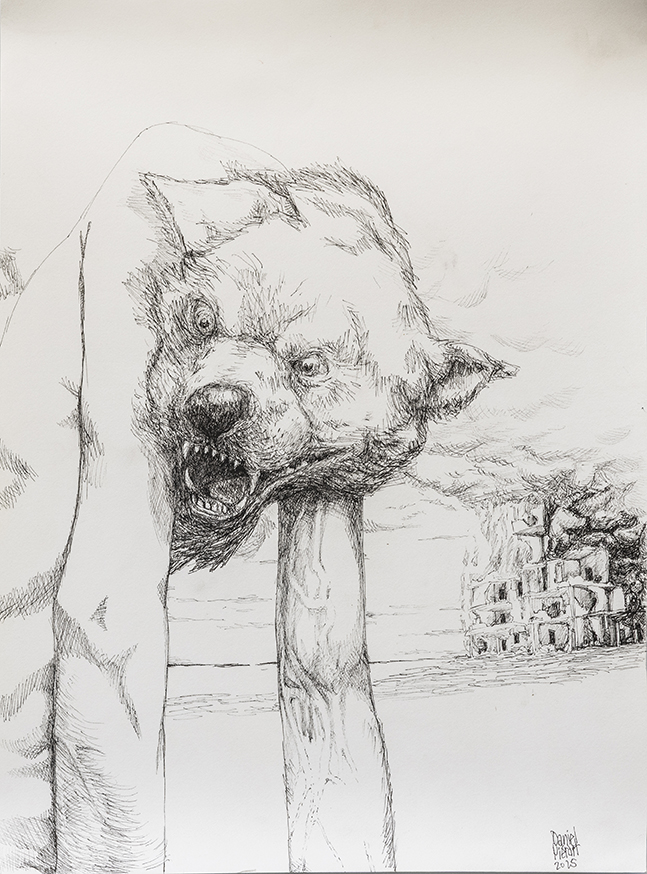
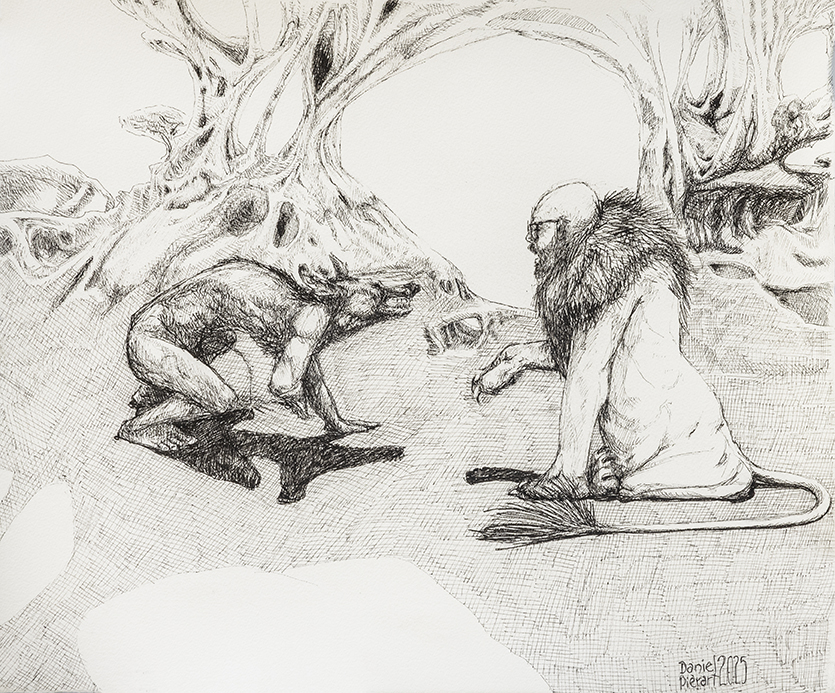
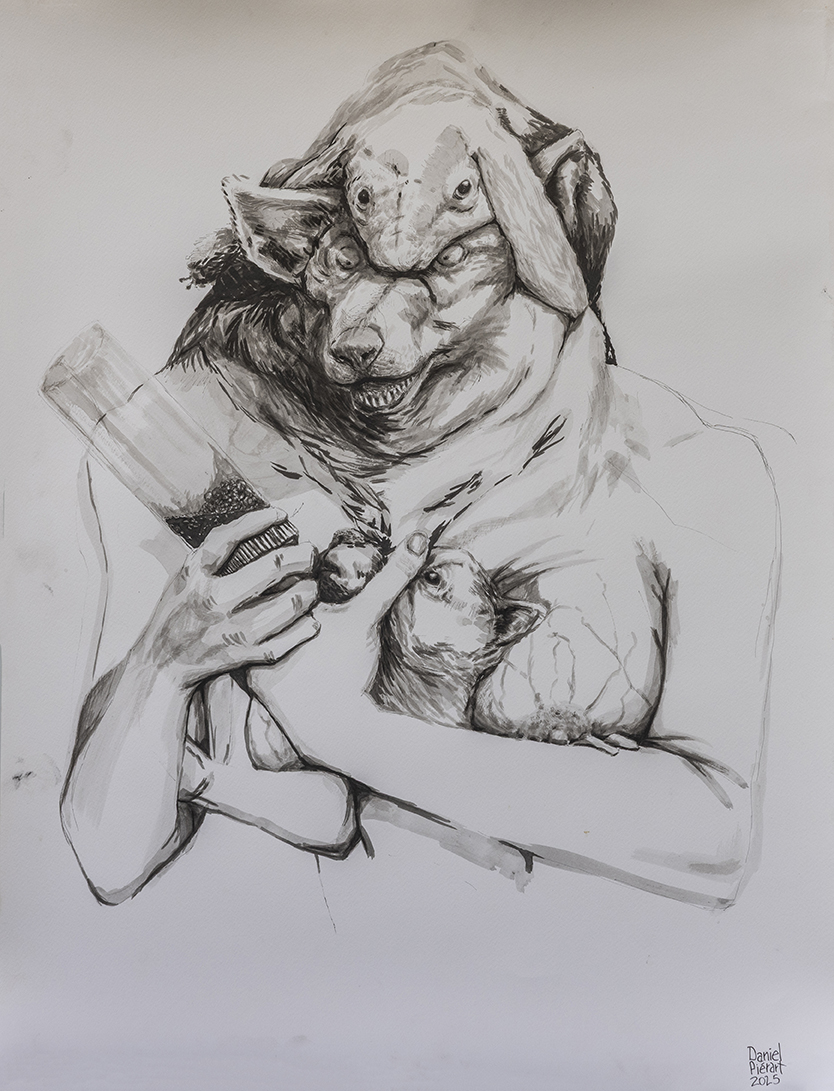
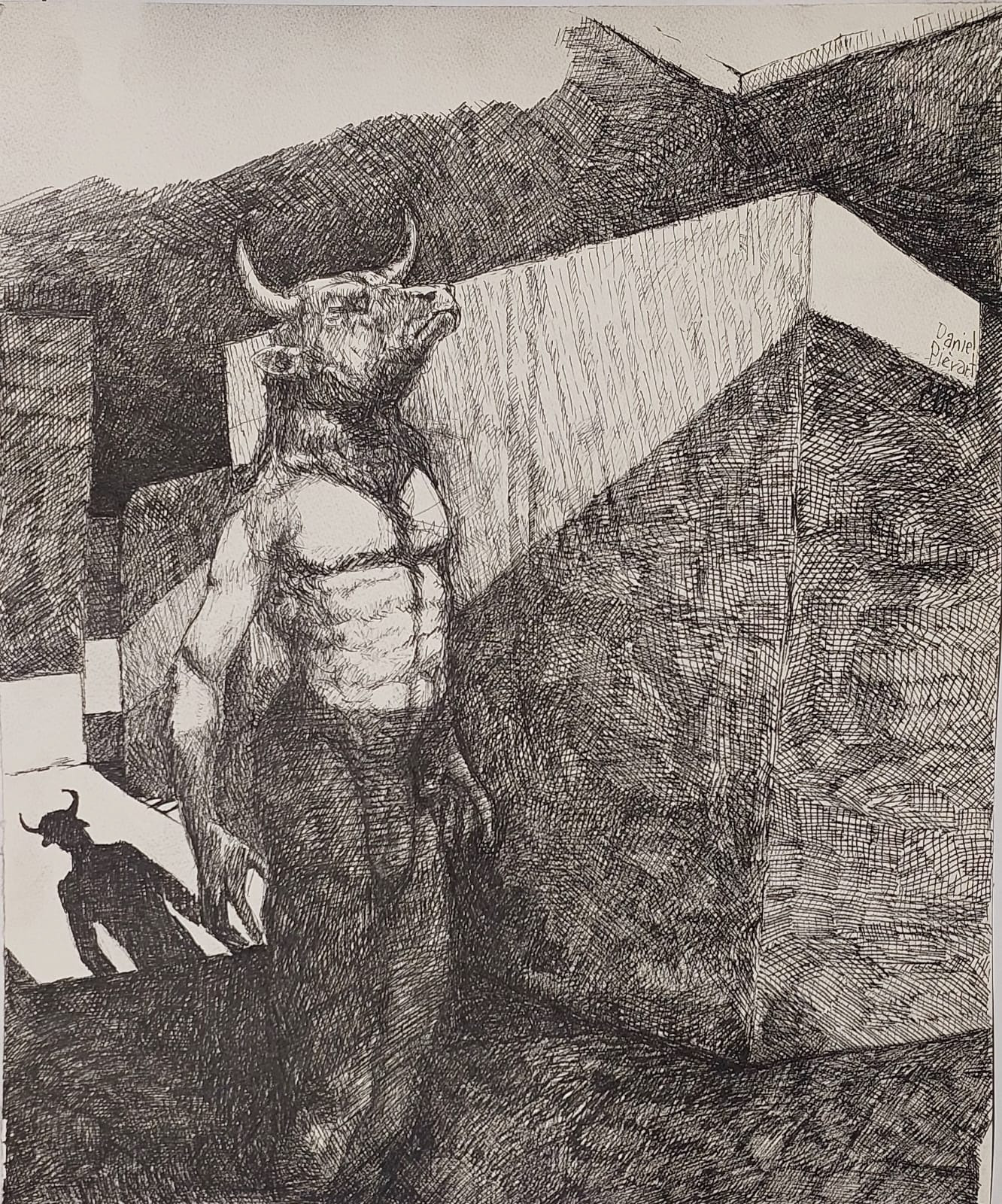
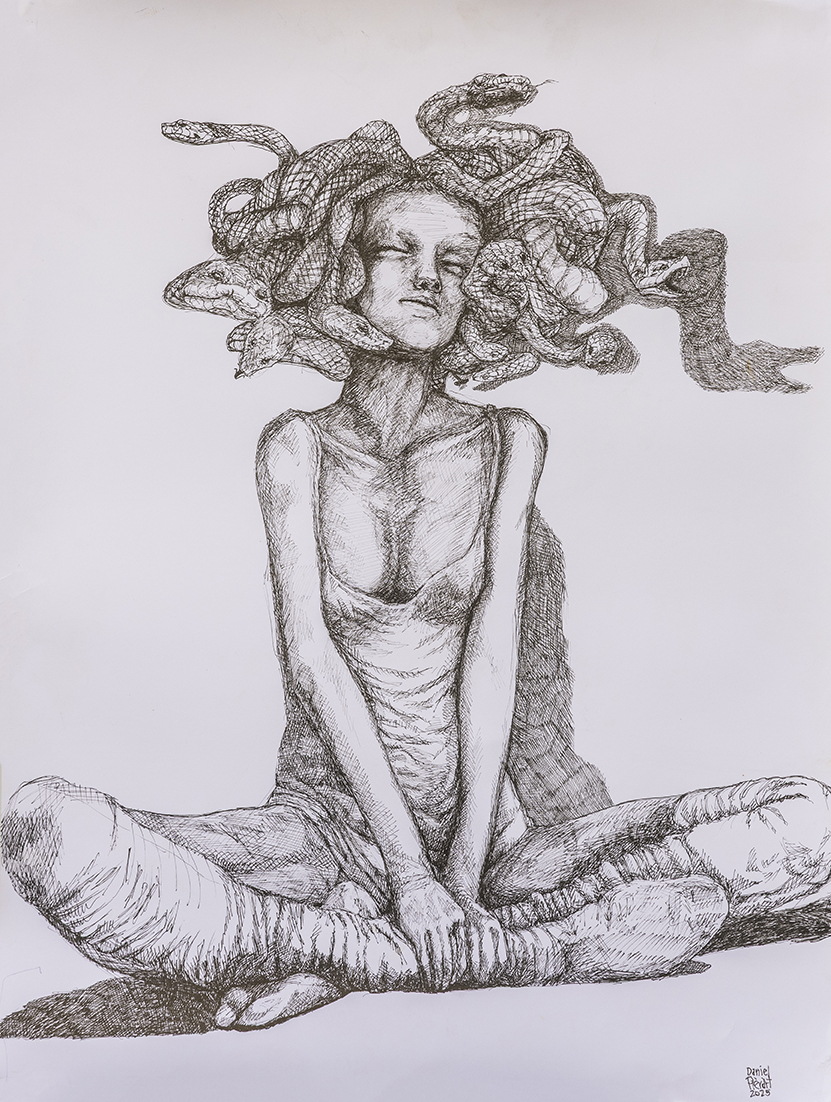
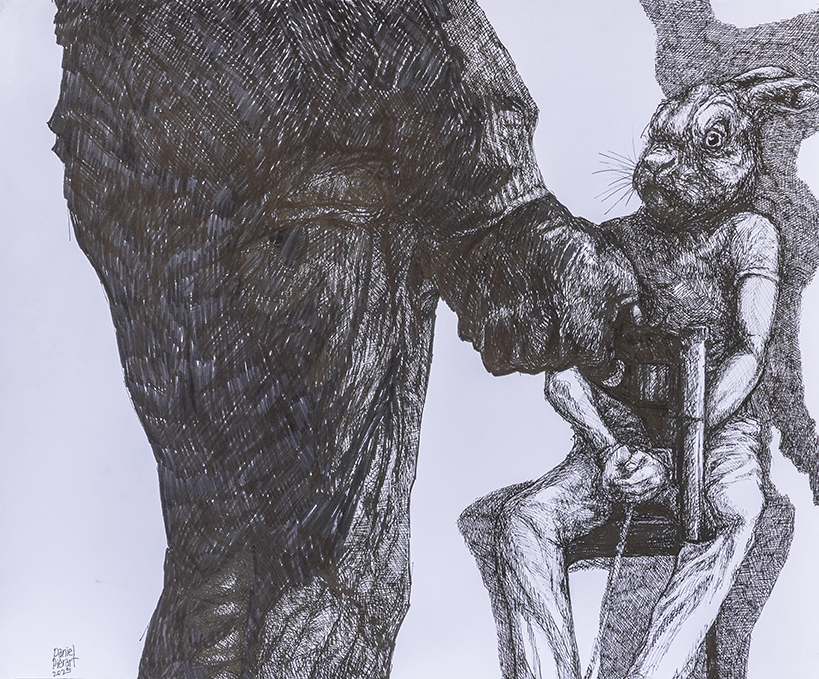
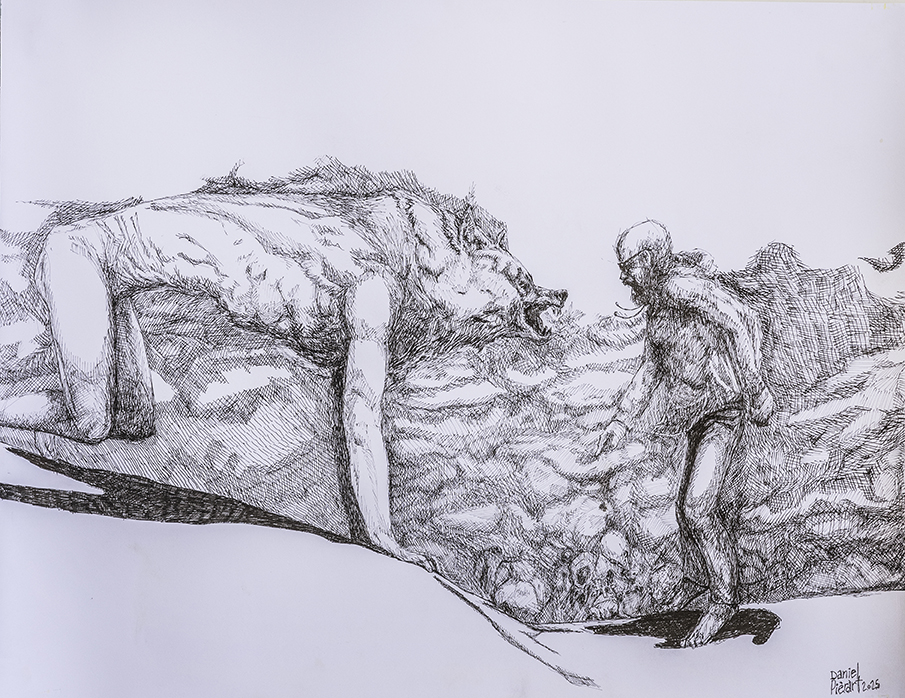
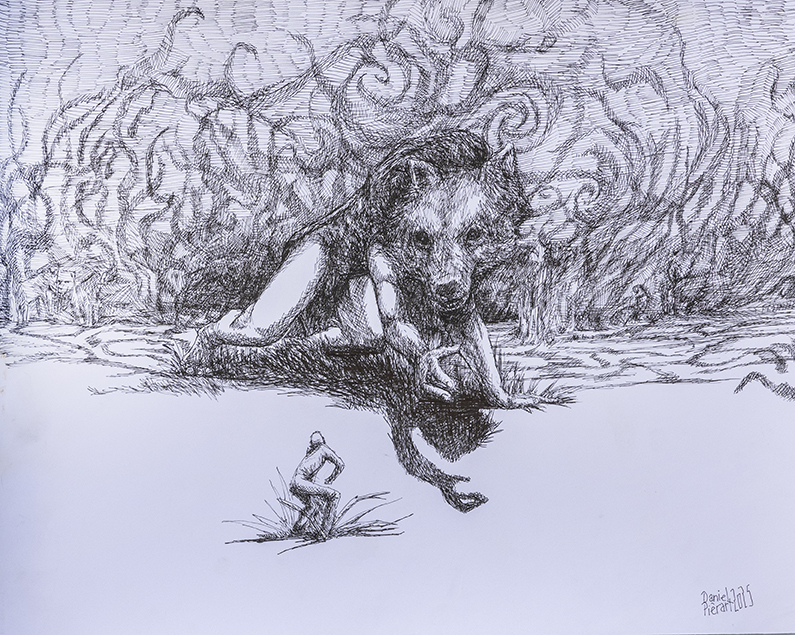
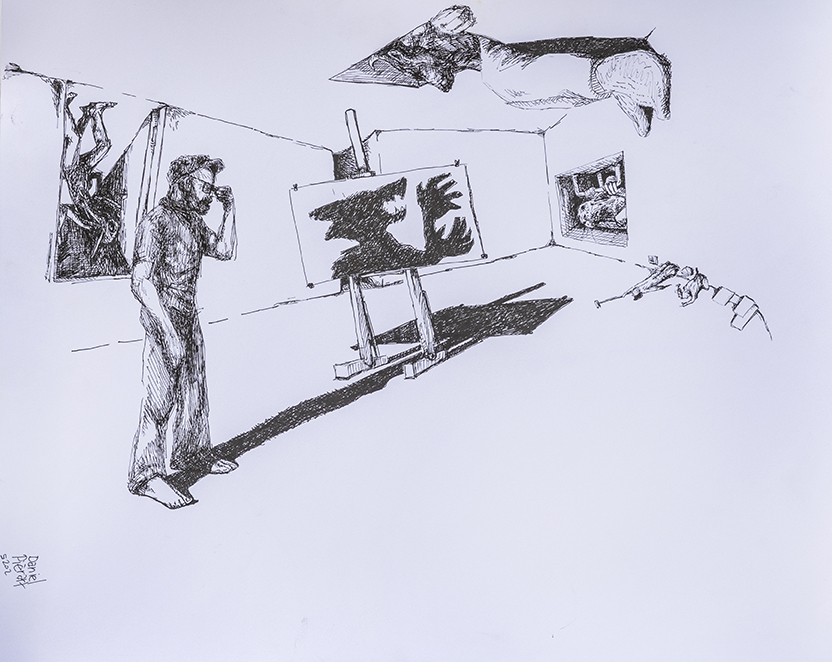
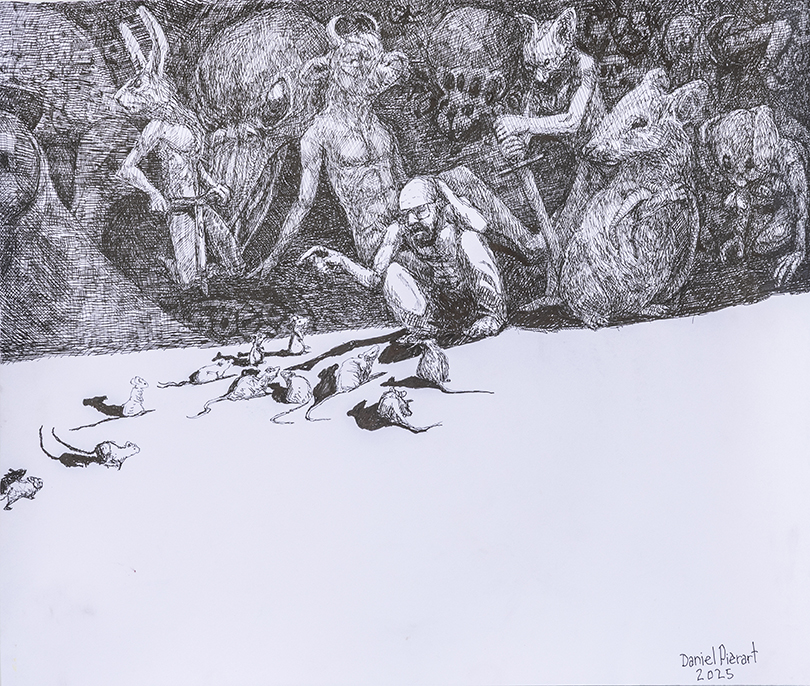
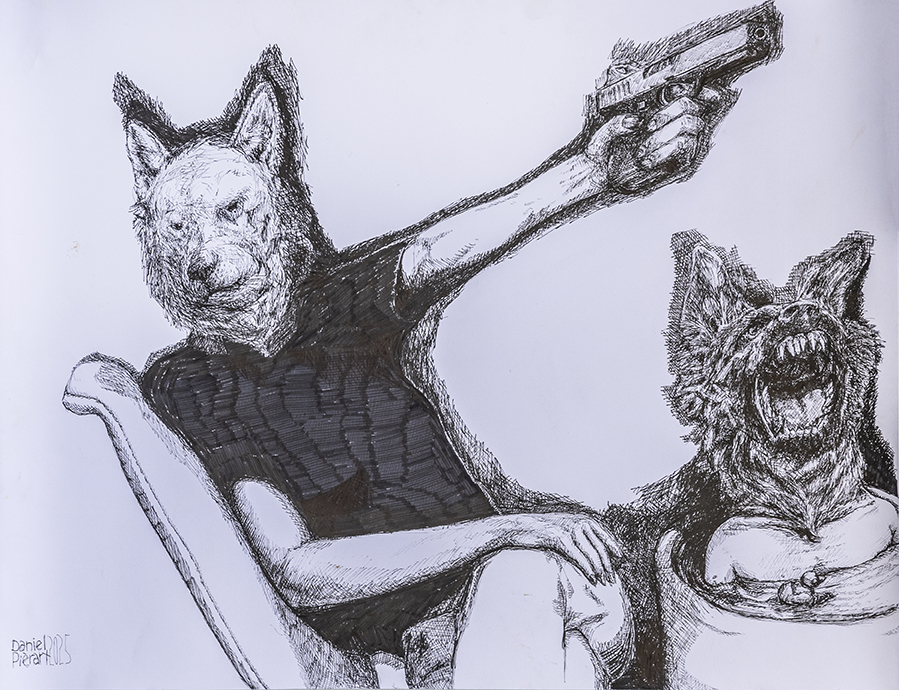
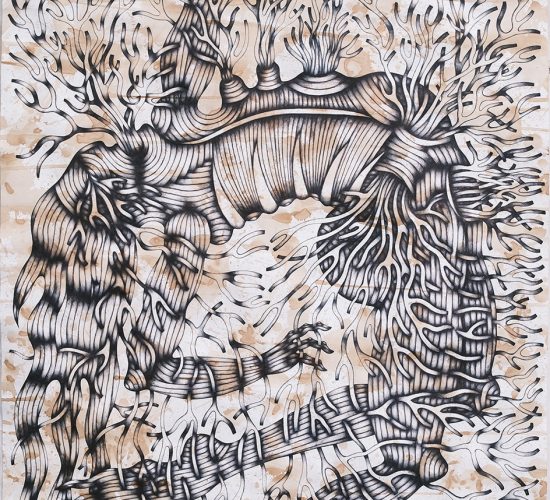
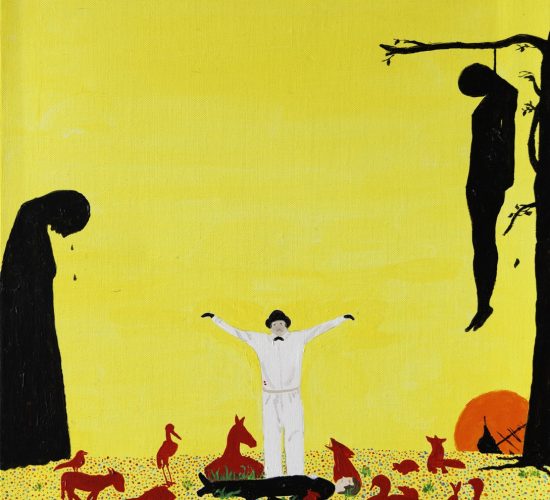
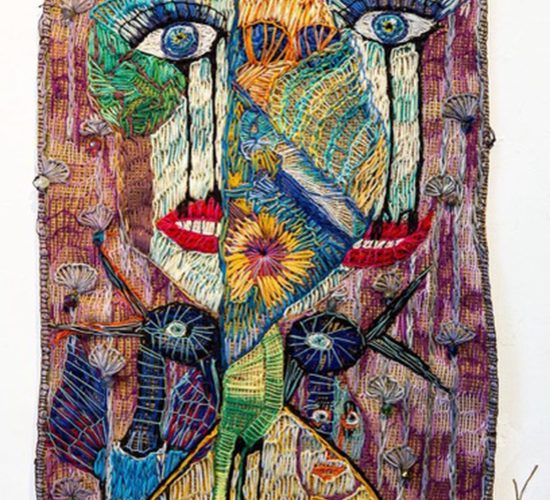
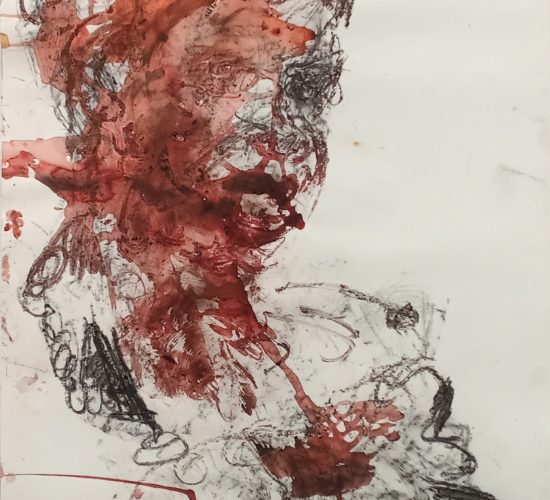
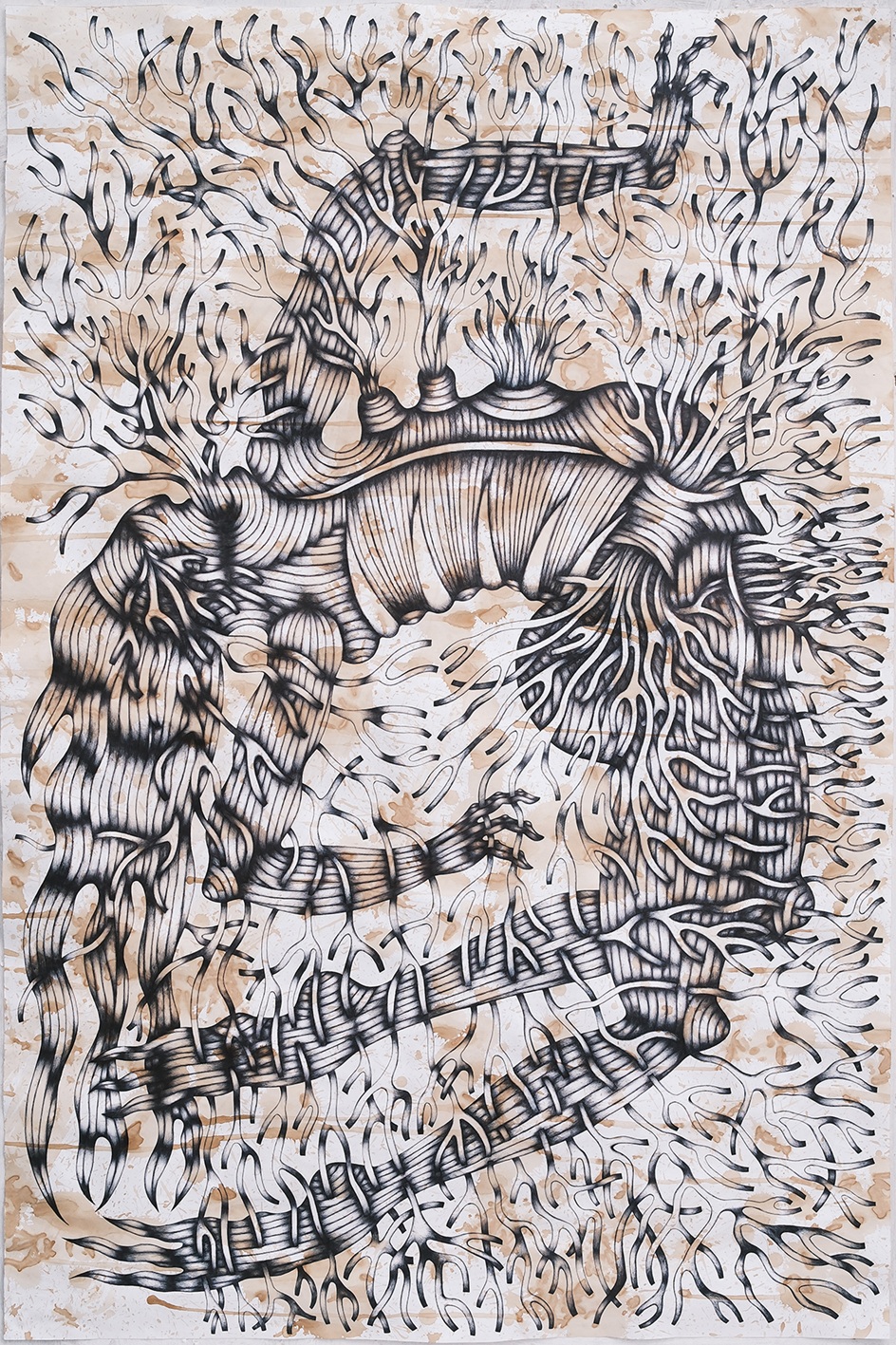
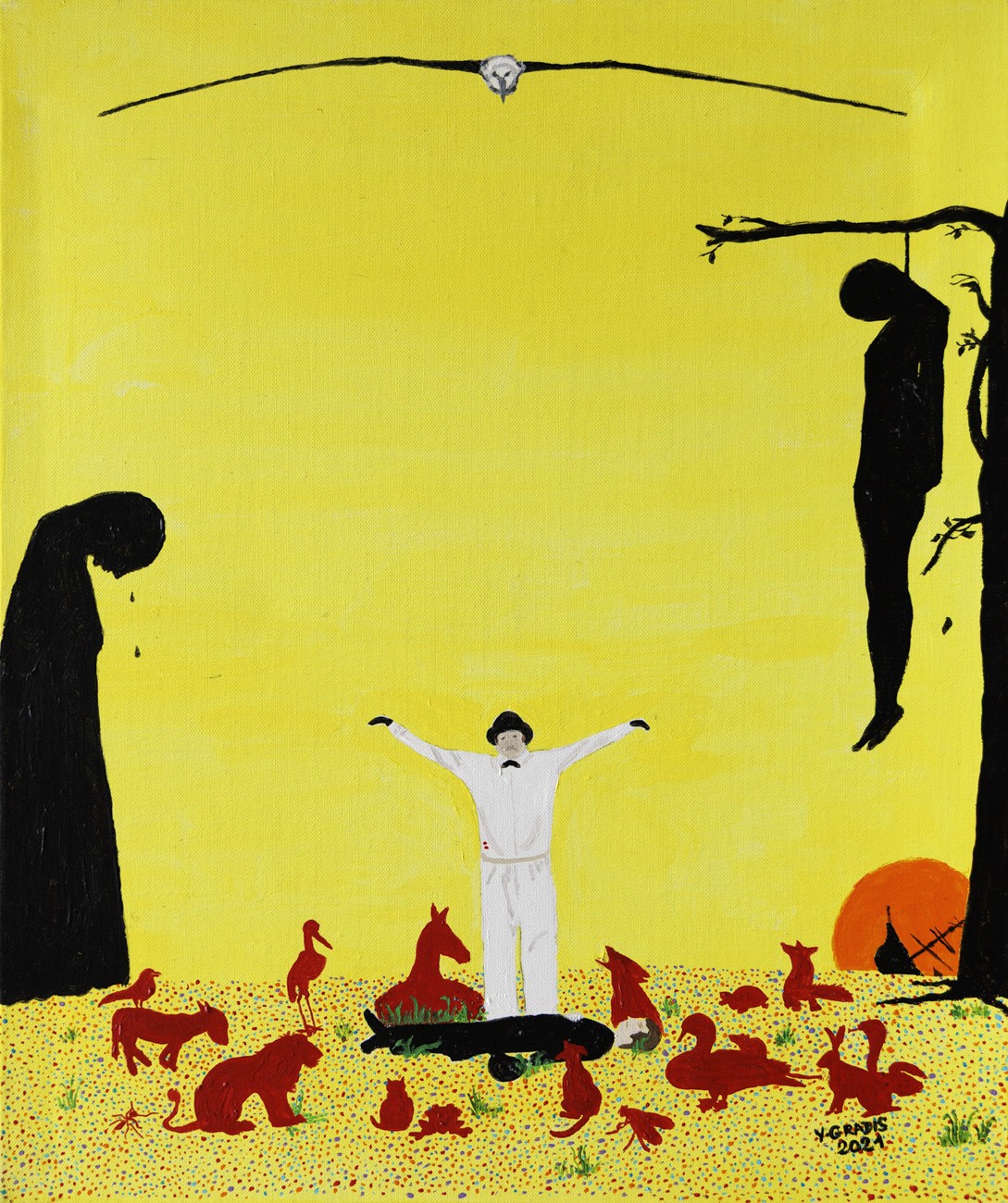
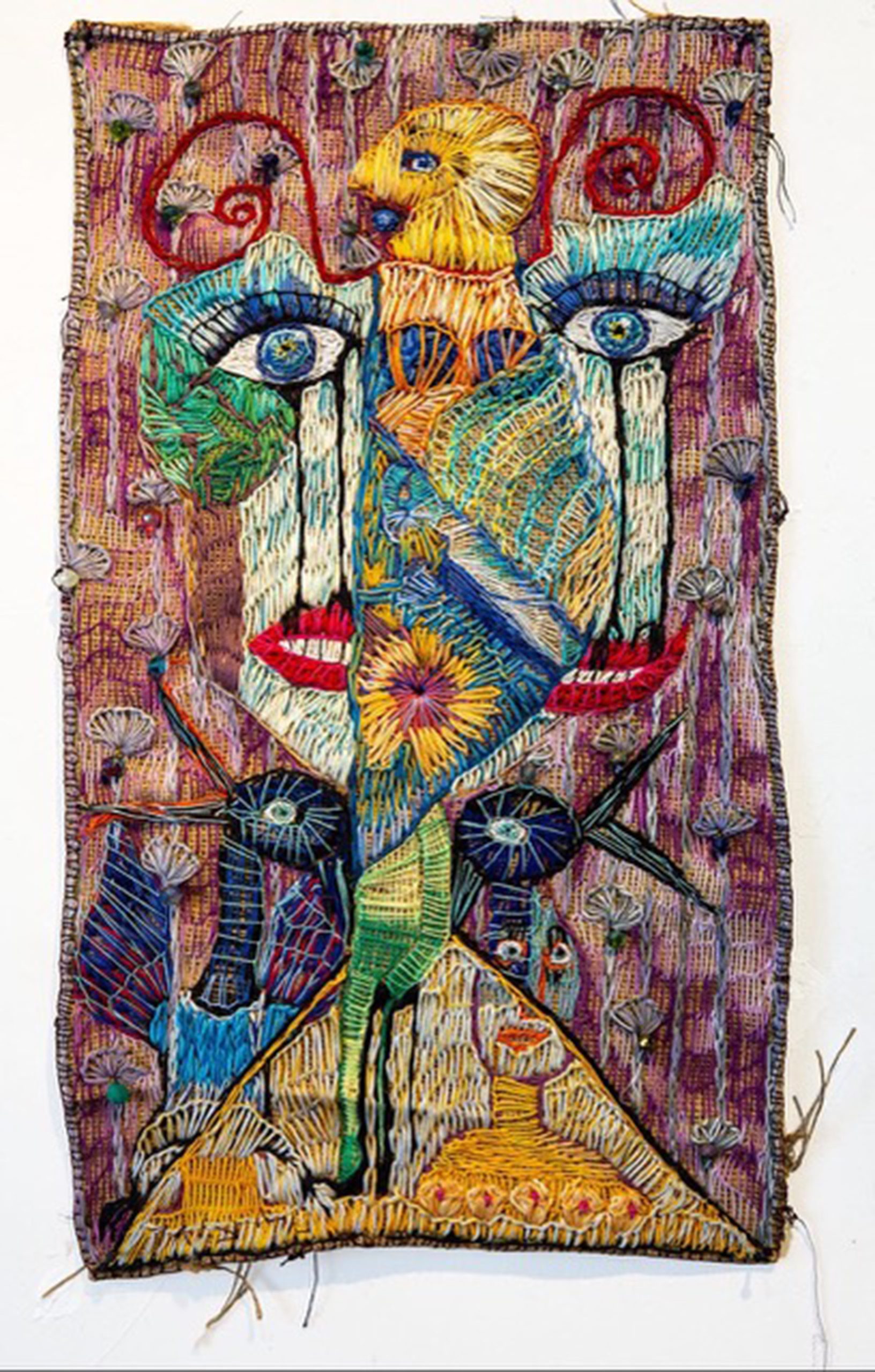
Since the onset of his post-traumatic stress disorder (PTSD), he has been drawing and creating as a form of self-therapy. In his inner world – the one that manifests in his drawings – he regains control. He projects all his conflicts onto the characters. Drawing in black and white allows him to play with the light cast on the object and connect it directly to the charged problem within him. During the process, the character in the drawing solves its problem – or at least allows him to examine it from the outside, confront it, or accept it from a different perspective.
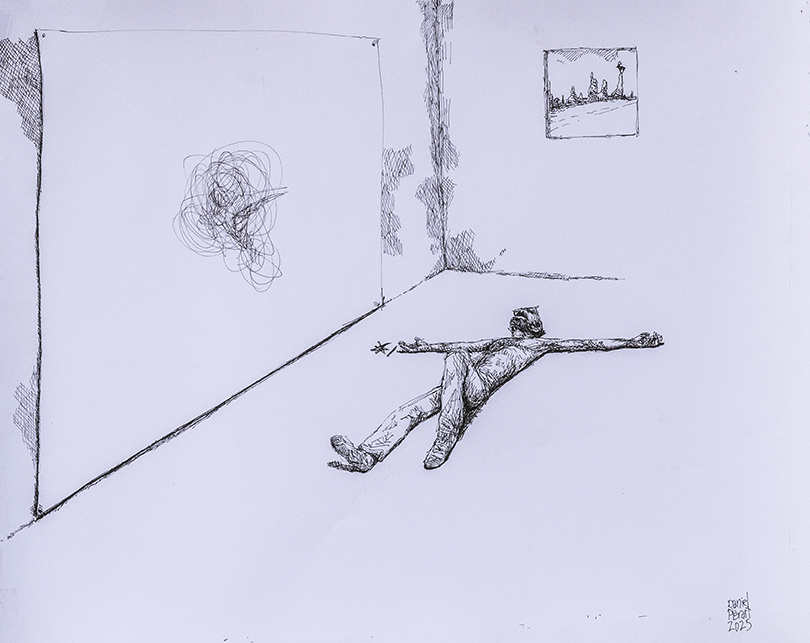
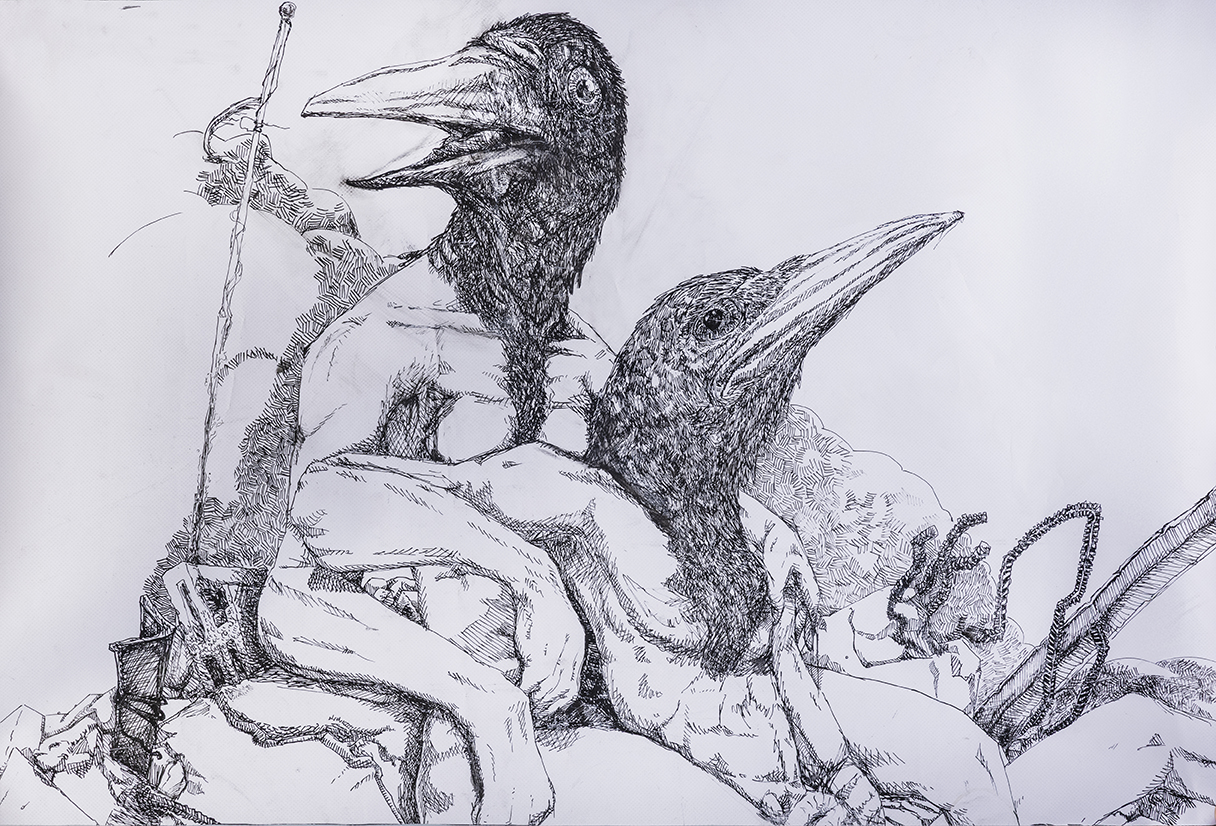
“The characters I create are often imaginary beings with animal characteristics – usually a human body with an animal head – symbolizing a particular emotion: the wolf represents anger, the rabbit – vigilance and panic, the rooster – pride, and so on. The bird-man – the first character, the “OG” of the series – embodies the turmoil itself. He was born after a visit to a bird sanctuary in Eilat, where I saw for the first time an animal entering a state of petrification. A guide was holding a bird motionless in his hand, frozen as if dead – I realized it had chosen the strategy of immobility in the face of a predator, as a last resort, pretending to be dead and hoping for the best. This image took me back a few days earlier, to a personal moment on the floor of my kitchen. That’s how the character was born. After the bird-man came the other characters, to express the emotional complexity of trauma. For me, creation is a way to express these emotions from a dissociated, distant, relatively cold place.
Emotions are triggered in response to external stimuli—which, in a post-traumatic mind, are perceived as threats—but as soon as the drawing takes shape, the emotional burden seems to be placed on the paper, thereby lightening the mind.
Creation did not begin with the wound. In fact, all my earliest memories are connected to drawing. At the age of four, Uncle Carlos taught us to draw a man on roller skates so that we wouldn’t bother the adults. I remember all of us – Dad, Mom, Oren, and me – sitting on the living room floor drawing on sheets of cardboard. Dad drew two wavy lines and turned them into canyon cliffs. I drew a man next to a house.
In elementary school, drawing became a management tool. Naturally curious, I paid less attention to the teacher’s explanations and instead wandered through my own associations. I didn’t always understand what zebras running through the savanna had to do with the story of the Exodus.
One day, I discovered that if I drew while listening, I could concentrate better. The eye follows the hand, the ear hears the teacher, and the brain divides its attention: one part retains the material, the other is released through the line.
Most teachers didn’t like it, but one of them understood: she simply placed a new sheet on the desk whenever the old one was full.
Over time, this mechanism refined itself and became a working tool. Even as an intelligence officer, I drew during meetings – I listened, responded when necessary, and my pen kept moving.
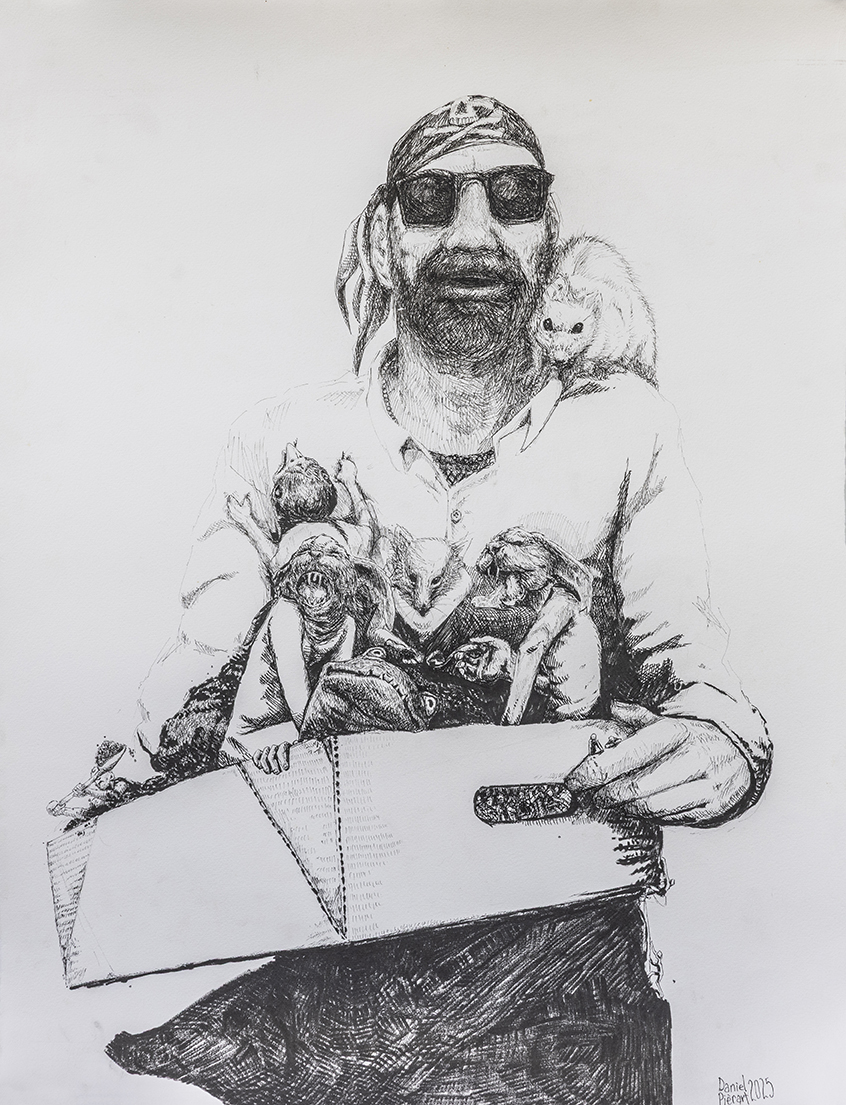
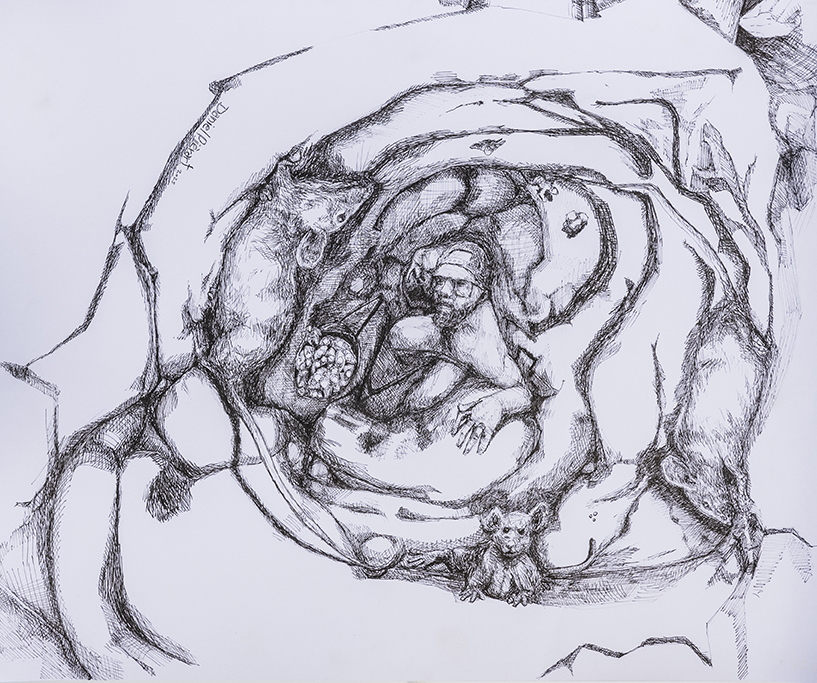
Mice represent ideas.
When an idea appears out of nowhere, like a rat blinking at the light as it emerges from under a dirty cloth, it may seem as if it appeared spontaneously, as if the mouse had been born from the cloth. But if we dig a little deeper, we discover that, like the rat, the idea is born from the compressed darkness within us, slips into the narrow cracks and emerges through memories, to come out into the light.
In my world, there is a huge troop of rats ready to be harnessed to the chariot of creation. Together, we set out to discover the world, we learn about anger, fear, anxiety, and we try to understand them, sometimes by observing them from the outside, sometimes by entering them as actors, by embodying a wolf, a bird or any other emotion in the story. »
Daniel Piérart